

IF YOU ARE HAVING AN EMERGENCY PLEASE CALL 911
Regular blood testing can play an important role in maintaining your overall health. Even when you feel perfectly healthy, certain conditions may develop without noticeable symptoms. Routine blood work can help your healthcare provider identify potential health concerns, monitor existing conditions, and recommend appropriate preventive care.
If you’re considering annual blood tests in Miami, it’s important to understand that not everyone needs the same tests every year. Your age, medical history, family history, medications, and individual risk factors help determine which screenings are appropriate.
At Premium Healthcare, our Primary Care team helps patients stay proactive about their health through personalized preventive care, annual physical exams, and laboratory services.
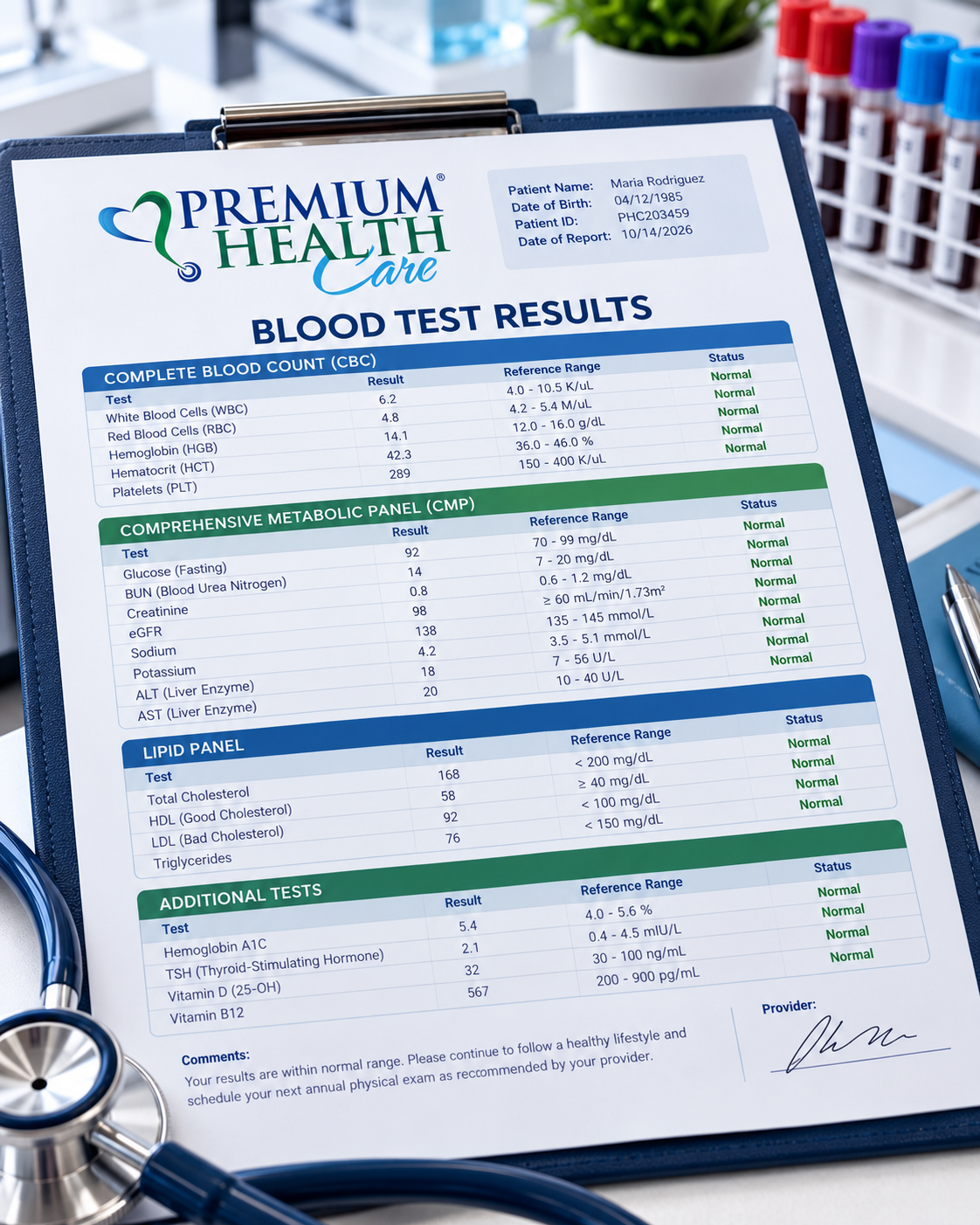
Depending on your health needs, your primary care provider may recommend several types of blood tests during your routine checkup.
Complete Blood Count (CBC): Measures red blood cells, white blood cells, and platelets to help evaluate conditions such as anemia and certain infections.
Comprehensive Metabolic Panel (CMP): Evaluates blood sugar, electrolytes, and markers of kidney and liver function.
Lipid Panel: Measures cholesterol and triglycerides to help assess cardiovascular risk.
Hemoglobin A1C: Measures average blood sugar over approximately three months and helps screen for or monitor diabetes.
Thyroid-Stimulating Hormone (TSH): Helps evaluate thyroid function when symptoms or risk factors suggest testing is needed.
These tests are not automatically necessary every year for everyone. Your healthcare provider can determine which ones are appropriate for you.

One of the biggest benefits of preventive blood testing is the ability to identify certain health concerns before noticeable symptoms develop.
For example, high cholesterol often produces no obvious symptoms but can increase your risk of heart disease and stroke. Blood sugar testing may identify prediabetes or diabetes, allowing patients and their healthcare providers to discuss lifestyle changes, monitoring, or treatment.
Blood tests may also help evaluate conditions affecting the kidneys, liver, thyroid, and blood cells when clinically appropriate. Identifying abnormalities can help your provider determine whether additional testing or medical attention is necessary.
Routine blood work is especially valuable for patients managing chronic conditions such as diabetes, hypertension, or high cholesterol. Your provider may use test results to monitor your progress, evaluate medications, and adjust your treatment plan.
However, more testing isn’t always better. Unnecessary blood tests can lead to misleading results and additional procedures. The goal is to receive the right screenings at the right time based on your individual health needs.
While some patients may only need occasional screening, others benefit from more frequent laboratory monitoring.
Patients with diabetes, kidney disease, thyroid conditions, or certain other chronic illnesses may require regular blood tests to monitor their health.
Additional testing may also be appropriate for individuals taking specific medications, experiencing unexplained symptoms, or having a family history of certain medical conditions.
Your primary care provider can recommend a testing schedule based on your health history and current needs.
Preparing for blood work is usually simple, but certain tests may require specific instructions from your healthcare provider.
Before your appointment, ask whether you need to fast. Some blood tests require avoiding food for a specified period, while many routine tests do not. Never assume fasting is necessary without confirming with your medical team.
It’s also important to inform your provider about any medications, vitamins, or supplements you’re taking, since some can affect laboratory results. Do not stop prescribed medications unless your provider specifically instructs you to do so.
After your results are available, your healthcare provider can help explain what the numbers mean and whether additional testing, lifestyle adjustments, or follow-up care is recommended.
Remember that a single abnormal result doesn’t always indicate a serious medical condition. Laboratory results should be interpreted alongside your symptoms, medical history, and overall health.
Taking a proactive approach to your health starts with understanding your body’s needs. At Premium Healthcare, we offer Primary Care in Miami, preventive health evaluations, annual physical exams, and access to in-house laboratory services to help patients stay informed about their well-being.
Our healthcare providers can help determine which blood tests are appropriate based on your age, medical history, and individual health concerns.
With multiple Miami locations and a comprehensive network of medical specialties, Premium Healthcare is committed to making quality healthcare convenient and accessible for individuals and families throughout our community.
Schedule your annual physical or preventive care appointment online today at BookPHC.com and ask your provider which blood tests are right for you.